


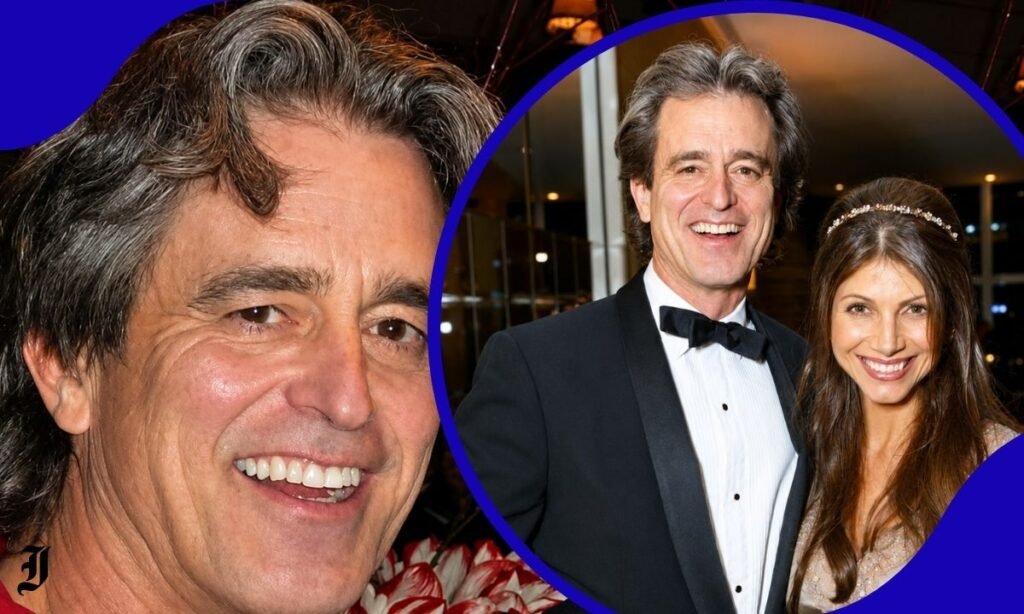
Malissa Feruzzi and Bobby Shriver are often introduced through the Kennedy family, but that framing tells only part of their story. Married since May 7, 2005, they have built separate public identities around a shared belief that institutions can be redirected toward human needs. Shriver brought law, journalism, politics, and international advocacy to campaigns addressing poverty and HIV/AIDS. Feruzzi Shriver moved from painting and a brief acting career into the machinery of education policy, arguing that art should be treated as essential instruction rather than an expendable school activity. Their marriage connects two public-service traditions, yet Malissa’s work is not simply an extension of her husband’s famous family. Her record in California arts education stands on its own.
Essential Facts
| Category | Verified information |
|---|
| Full names | Malissa Feruzzi Shriver and Robert Sargent “Bobby” Shriver III |
| Marriage date | May 7, 2005 |
| Malissa’s background | California-born artist and former actor, raised by Italian parents |
| Malissa’s education | UCLA women’s studies degree, 1989; later attended Harvard Kennedy School’s state and local government programme |
| Malissa’s acting credits | Renegade, The Desperate Trail, Cries Unheard and Till the End of the Night |
| Malissa’s public service | California Arts Council member, 2005–2013; chair, 2009–2013 |
| Major arts initiatives | Co-founder of CREATE CA and Turnaround Arts California; founding executive director and later board leader of Turnaround Arts California |
| Bobby’s birth | April 28, 1954, Chicago, Illinois |
| Bobby’s education | Yale College and Yale Law School; JD completed in 1981 |
| Bobby’s family connection | Son of Sargent and Eunice Kennedy Shriver; nephew of President John F. Kennedy |
| Bobby’s major organisations | DATA, ONE and (RED) |
| Political service | Santa Monica City Council, 2004–2012; mayor, May–December 2010 |
| Current public standing | Feruzzi Shriver remains associated with Turnaround Arts California; Bobby remains publicly identified with the Shriver family’s philanthropic institutions and as a co-founder of ONE and (RED) |
Malissa Feruzzi’s Early Life and Artistic Formation
Malissa Feruzzi was raised in California by Italian parents. Her father was a sculptor, and she has described art as an important part of her childhood environment. That early setting helps explain the artistic foundation that later informed her arts-education advocacy. Reliable public sources do not provide a consistently documented exact birth date, so such details should be treated cautiously rather than repeated as settled fact.
She attended the University of California, Los Angeles, earning a degree in women’s studies in 1989. Although her parents reportedly encouraged her to choose a conventionally practical field, she remained drawn to painting and creative expression. She later attended a state and local government program at Harvard Kennedy School, an unusual pairing of artistic training, gender studies and public-policy education that helps explain the direction her career eventually took.
“I was an artist, I never thought I would be a politician.”
The sentence captures the central shift in her professional life. Feruzzi Shriver did not pursue elected office; instead, she built influence through government agencies, nonprofit coalitions and education-policy networks. This role made her a public-service advocate rather than a politician.
A Brief Acting Career Before Arts Advocacy
Before becoming widely associated with education reform, Feruzzi worked as an actor during the 1990s. Her documented credits include an appearance in the television series Renegade, the role of Kate Jessie in the 1994 Western The Desperate Trail, a small role in the television film Cries Unheard: The Donna Yaklich Story, and the character Hope in the 1995 thriller Till the End of the Night, giving her direct experience in creative work.
The screen career appears to have been relatively short. It should not be inflated into a major Hollywood résumé, but it remains relevant because it places her later advocacy within direct experience of creative work. She was not approaching arts policy solely as an administrator. She had worked as a painter, actor, and owner of Feruzzi Fine Arts before becoming a state arts leader.
From Working Artist to California Arts Policymaker
Feruzzi Shriver joined the California Arts Council in 2005, following an appointment by then-Governor Arnold Schwarzenegger. Some secondary profiles compress the timeline and imply that she immediately became chair. Official state records show a more precise sequence: she joined the council in 2005 and was elected chair on January 27, 2009. She completed two terms on the council and four years as chair, using those roles to shape arts policy before leaving in February 2013.
Her tenure coincided with severe financial pressure on California’s public arts infrastructure. The California Arts Council had lost more than 90 percent of its state general-fund allocation during the budget crisis that preceded her appointment. Feruzzi Shriver therefore operated in an agency with substantial symbolic authority but limited spending power. Her response was to place arts education, coalition-building and alternative fundraising at the center of the council’s work.
One visible initiative involved California’s Arts License Plate program. Under her leadership, the council promoted the specialized plate as a source of arts funding, recruiting public figures from entertainment, food, architecture and philanthropy to support the campaign. The effort reflected her broader strategy: use cultural visibility to strengthen institutions that could not rely on conventional government appropriations.
CREATE CA and the Campaign for Arts in Public Schools
Feruzzi Shriver’s principal policy concern was the decline of arts instruction in California public schools. She argued that music, theatre, visual art and dance were not decorative additions to education but tools for critical thinking, engagement and intellectual inquiry, and she used that position to press for policy change.
After chairing California’s team at the National Endowment for the Arts’ Education Leaders Institute, she helped establish CREATE CA, originally expanded as Core Reforms Engaging Arts to Educate in California. The statewide initiative brought education officials, artists, nonprofit organizations and policy specialists together to address the erosion of arts education.
She also co-chaired a state task force charged with preparing A Blueprint for Creative Schools, a policy framework released in 2015. The project sought to move arts education beyond isolated programs by embedding creativity within broader school policy and curriculum planning.
In 2014, Americans for the Arts recognized Feruzzi Shriver with its Arts Education Award. The organization cited her leadership in program design, execution, and organizational advocacy. That recognition came after she had left the California Arts Council, showing that her influence was continuing through independent coalitions rather than ending with her state appointment.
Building Turnaround Arts California With Frank Gehry
A major turning point came through Feruzzi Shriver’s collaboration with architect Frank Gehry. The two co-founded Turnaround Arts California in 2014, developing it as an independent nonprofit that used arts integration to support schools serving high-need communities. The initial program worked with ten California elementary schools and drew support from the California Arts Council, education authorities, foundations and private donors.
Feruzzi Shriver served as the organization’s founding executive director and later as board chair. More recent public records identify her as its president and co-founder, while nonprofit filings continue to list her in an unpaid board-leadership role.
Her work with Gehry illustrates how her career developed beyond conventional arts patronage. Rather than sponsoring performances or exhibitions, Turnaround Arts California aimed to alter the culture of struggling schools by integrating artistic practice into teaching, student participation and community life.
That distinction matters. Feruzzi Shriver’s public record is strongest when understood as education-policy work carried out through the arts, not simply arts promotion. This is the thread that ties her career together.
Bobby Shriver’s Kennedy and Shriver Family Background
Bobby Shriver was born Robert Sargent Shriver III on April 28, 1954, in Chicago. He is the eldest child of Sargent Shriver and Eunice Kennedy Shriver. His father founded the Peace Corps and directed major anti-poverty programs during President Lyndon B. Johnson’s administration. His mother founded the Special Olympics. Through her, Bobby is a nephew of President John F. Kennedy, Senator Robert F. Kennedy and Senator Edward Kennedy.
The family connection gave him unusual access to political and philanthropic networks, but it also placed him inside a tradition in which public service was treated as an obligation. From there, his later career combined several fields rather than following a single electoral path.
Shriver graduated cum laude from Yale College and initially worked as a journalist, including positions with newspapers in Maryland, Chicago and Los Angeles. He later attended Yale Law School, earning his law degree in 1981, and clerked for Judge Stephen Reinhardt on the United States Court of Appeals for the Ninth Circuit. He subsequently worked in venture capital with the firm associated with James D. Wolfensohn, building experience that later informed his public service.
Special Olympics Fundraising and Entertainment Production
Shriver’s early philanthropic work grew from his mother’s Special Olympics movement. In 1987, he produced an ABC prime-time program about the Special Olympics World Games. That same year, he worked with Jimmy and Vicki Iovine on the first A Very Special Christmas album. The recording series brought major musicians together to raise funds for Special Olympics programs. The related entertainment projects eventually generated more than $100 million, according to the Sargent Shriver Peace Institute and ONE.
His work in entertainment also included film and television production. From that experience, his most consequential public role emerged through the relationship he developed with U2 singer Bono via the A Very Special Christmas project.
DATA, ONE and the Creation of (RED)
In 1999, Bono asked Shriver to assist the Jubilee 2000 debt-relief campaign in the United States. Shriver helped shift the American strategy from collecting petition signatures toward lobbying Congress for financial commitments, linking his role to a more forceful policy approach. The campaign contributed to a substantial increase in funding allocated for debt relief.
The collaboration led to the establishment of DATA—Debt, AIDS, Trade, Africa—in 2002. DATA combined policy research, political advocacy and public pressure around debt cancellation, HIV/AIDS treatment, trade rules and government accountability. In 2004, DATA helped launch the ONE Campaign, and the two organizations formally combined in 2008.
Shriver and Bono then founded (RED) in 2006. Rather than operating as a traditional charity, (RED) developed commercial partnerships through which participating brands directed money toward the Global Fund’s work against AIDS and other global-health threats. The organization remains active and continues to identify Bono and Bobby Shriver as its co-founders.
The model attracted both praise and scrutiny because it joined consumer marketing to humanitarian fundraising. Its importance lies in the attempt to make global-health financing part of ordinary commercial transactions rather than an occasional charitable appeal.
Bobby Shriver’s Career in Santa Monica Politics
Shriver entered local politics in 2004, winning election to the Santa Monica City Council. He was re-elected in 2008, served as mayor pro tempore from December 2005 until November 2006, and served as mayor from May through December 2010. His council service ended in 2012.
His local agenda included homelessness, housing for military veterans and environmental issues affecting Santa Monica Bay. His political style was energetic and sometimes confrontational, according to contemporary reporting, but his council record showed an interest in translating large policy ambitions into municipal action.
The local work differed in scale from his international activism, yet both relied on coalition-building. Whether seeking federal support for debt relief or local support for veterans’ housing, Shriver repeatedly worked at the point where advocacy had to become government policy.
Marriage, Family and a Deliberately Limited Public Image
Bobby Shriver and Malissa Feruzzi married on May 7, 2005, in Los Angeles. Contemporary reports described Feruzzi as both an artist and a lawyer’s bride, while later public biographies consistently identify the same wedding date.
They have raised a family together, but neither has built a public brand around private domestic disclosure. Their children have occasionally appeared in established family profiles, although the details of their lives do not need to be expanded beyond what is relevant to the couple’s public biography.
Available evidence indicates that the marriage continues. The Sargent Shriver Peace Institute identifies Malissa as Bobby’s wife, and the couple was photographed attending a Beverly Hills event together on February 26, 2026. That recent appearance provides firmer support than recycled celebrity-biography pages that may not be regularly updated.
Their professional interests sometimes intersect. Both have worked around arts institutions, public policy and philanthropy, and Bobby’s relationships helped connect Malissa with figures such as Frank Gehry. Yet the historical record shows that she converted those connections into a sustained organizational career of her own.
Her influence cannot be reduced to access alone. Access may open a door; it does not run a statewide coalition, chair a government arts agency or maintain a school-reform nonprofit.
Key Takeaways: The Bottom Line
Malissa Feruzzi and Bobby Shriver represent two related but distinct forms of public service.
Bobby inherited one of America’s most recognizable political family names, then applied his legal, media and organizing experience to Special Olympics fundraising, international debt relief, global-health campaigns and municipal government. Malissa entered public life from the opposite direction: as a working artist who came to believe that creative education required political organization.
Their marriage brought those worlds together. Its larger significance is not social glamour or Kennedy-family proximity, but the sustained conversion of influence into institutions—DATA, ONE, (RED), CREATE CA and Turnaround Arts California—that could continue operating beyond a single campaign or public appointment.
(FAQs)
Who is Malissa Feruzzi Shriver?
Malissa Feruzzi Shriver is an American artist, former actor, and arts-education advocate. She is a former chair of the California Arts Council and a co-founder of CREATE CA and Turnaround Arts California.
Is Malissa Feruzzi still married to Bobby Shriver?
Public sources continue to identify them as married. They wed on May 7, 2005, and were photographed attending an event together in February 2026.
Was Malissa Feruzzi an actor?
Yes. She had a brief screen career during the 1990s, appearing in productions including Renegade, The Desperate Trail and Till the End of the Night.
What is Bobby Shriver famous for?
Bobby Shriver is known as a co-founder of DATA, ONE and (RED), a former Santa Monica council member and mayor, and a member of the Kennedy-Shriver family.
How is Bobby Shriver related to John F. Kennedy?
Bobby’s mother, Eunice Kennedy Shriver, was President John F. Kennedy’s sister. Bobby Shriver is therefore JFK’s nephew.
You might also like:Kalliope Rice and Angourie Rice: Inside the Creative Family Behind Two Different Screen Careers
